MAD//Fest Replay: How Bentley Is Using Audience Intelligence to Build Brand Relevance
How Bentley is building a richer understanding of the audiences shaping its future
How does a brand with more than 100 years of heritage remain relevant for the next 100?
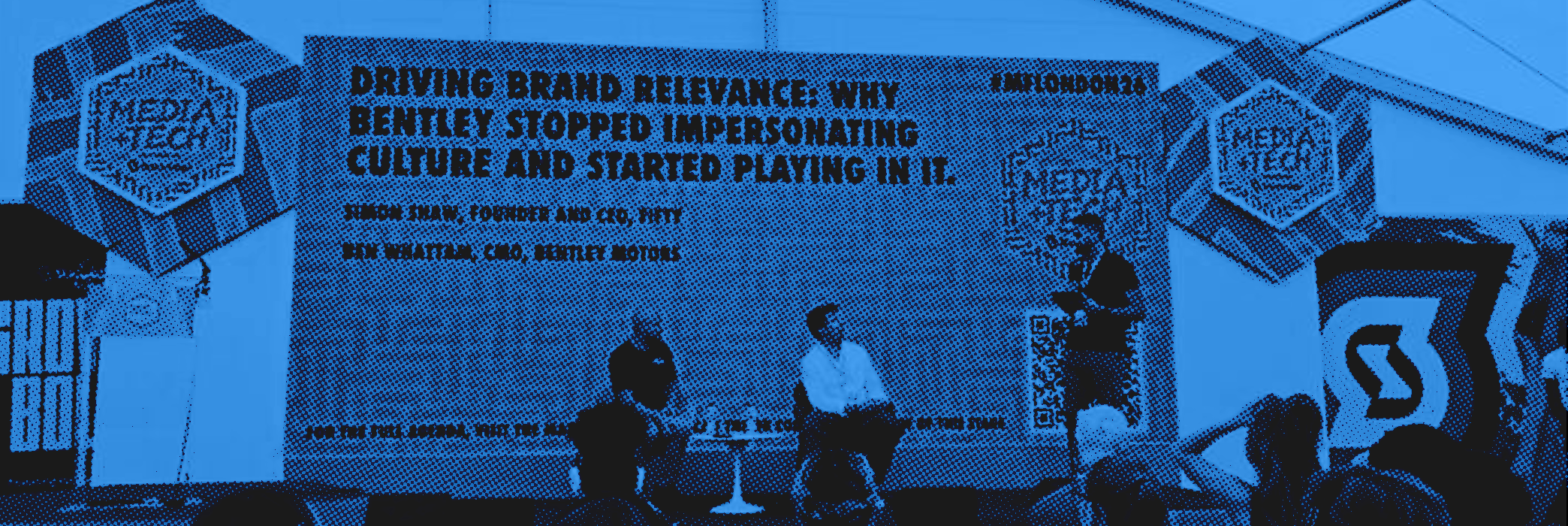
That was the question at the centre of our MAD//Fest London session, where Bentley Motors Marketing Director Ben Whattam joined Fifty's CEO Simon Shaw to discuss Bentley’s cultural ambitions and the role audience intelligence can play in making them more tangible.
The conversation took place at an early stage in our partnership. Bentley and Fifty were only one month into a 12-month engagement, with the initial focus on audience discovery. Rather than presenting a finished case study, the session offered an open look at what Bentley wants to achieve, the questions it is asking and how a digitised audience could help the business make more informed marketing decisions.
Why audience understanding matters to Bentley
Ben began by setting out the challenging environment facing the automotive sector.
Macroeconomic uncertainty, changing consumer demand and the significant investment required by electrification are creating pressure across the industry. Even within the luxury category, Bentley is not immune to those conditions.
However, as Ben explained, buying a Bentley is not a purely rational decision. Nobody needs a Bentley. The purchase is driven by emotion, desire and what the brand represents.
That means brand remains critically important. It also means Bentley needs to understand the interests, motivations and cultural connections of the people it wants to engage, rather than relying solely on conventional demographic and psychographic segmentation.
Defining Bentley’s role in culture
Bentley’s ambition is not simply to advertise around culture. It wants to identify where it can play a credible and authentic role within it.
Ben described this opportunity across three broad areas.
The first is the culture closest to Bentley: people who are passionate about and motivated by cars.
The second is the wider set of cultures connected to the automotive world, including fashion, music and hospitality. Bentley wants to understand where it has a relevant role in these spaces and how it can participate without appearing forced or inauthentic.
The third is wider culture. This represents new audiences, opportunities and conversations that may not generate sales immediately but could influence Bentley’s relevance over the next five to ten years.
Partnerships and ambassadors are expected to be important ways for Bentley to engage across these cultural areas. The challenge is identifying which opportunities are genuinely aligned with the brand and its audiences.
Turning the strategy into a tangible audience map
The role of Fifty is to help Bentley map these cultural pillars into a detailed, digitised view of its audience.
During the session, Simon demonstrated some of the initial work undertaken across markets including the UK, US, Japan, Germany, the UAE and South Korea.
The analysis organised car culture into a series of distinct audience tribes, including automotive insiders, electric vehicle enthusiasts, rally communities, motorcycle lovers and audiences connected to automotive events.
It also showed how Bentley can explore the brands, influencers, publishers, media channels and wider interests connected to these groups.
This creates a more detailed view than a single, broad “car enthusiast” segment. It can help Bentley understand which communities matter most to the brand, where those communities can be found and how their interests differ across markets.
Adding evidence to marketing judgment
Ben was clear that this is not about removing human judgment from marketing.
Within established automotive environments, Bentley already has significant experience and knowledge. Decisions about media, events and partnerships are informed by that expertise, but they can still involve a degree of instinct.
Audience intelligence introduces an additional layer of evidence. It can help Bentley validate existing assumptions, compare potential opportunities and bring more science into decisions without dismissing the experience of its team and partners.
The potential becomes even greater as Bentley moves further beyond familiar automotive spaces.
The early work had already identified niche communities and opportunities in markets such as South Korea, Japan and Australia. Some might otherwise have depended entirely on local knowledge or taken considerably longer to uncover.
For a brand operating across 52 markets, accelerating that discovery process could help central and local teams work more effectively together.
What Bentley hopes to achieve
Bentley is exploring several practical applications for the audience intelligence created through the partnership.
These include supporting decisions around partnerships and ambassadors, informing media targeting and social strategy, and helping local marketers identify and nurture relevant audiences more quickly.
Bentley also wants to assess previous partnerships and use those learnings to inform future decisions. A clearer understanding of its global audience could strengthen conversations with prospective brand partners by demonstrating the scale, relevance and distinctiveness of the communities Bentley can reach.
Internally, the work can give the wider business and its shareholders greater confidence that Bentley understands its audiences and can identify meaningful opportunities for differentiation.
Ben also described a longer-term ambition to connect this external audience intelligence with Bentley’s own customer data. That could eventually help the business develop a richer understanding of the interests and motivations of individual prospects.
He was equally clear that this is a longer-term goal rather than an immediate outcome of the current engagement.
Technology as an enabler, not the end result
One of the most important points came at the end of the session.
When asked how a brand such as Bentley is ultimately revitalised, Ben’s answer was clear: in the real world.
Technology and AI can help Bentley understand audiences, identify opportunities and make better-informed decisions. But the brand itself lives through its products and through the communities of people who experience, discuss and love cars.
Audience intelligence does not replace that human connection. Its role is to help Bentley understand where those connections exist and how the brand can participate in them more effectively.
Watch the full MAD//Fest replay to hear Ben and Simon discuss Bentley’s strategy, the early audience discovery work and what the partnership could enable next.
Watch the session replay above.
To explore how Fifty can digitise your audience and create a richer foundation for marketing, media and partnership decisions, get in touch with our team.