


With humble origins in Eighteenth Century England, the concept of the music festival has captivated us for hundreds of years. To ring in the festival season, we’ve run a market analysis to compare a range of music festivals favoured by Brits, including domestic events like Glastonbury and Wireless, as well as international festivals such as Dimensions, in Croatia. The competitors were chosen to encapsulate the full spectrum of festival-going audiences, with events aimed at both mainstream and alternative audiences.
Analysis
Diving into the study, we found that we could divide the festival audience into these 5 key groups:
Gen Z Pop Culture:
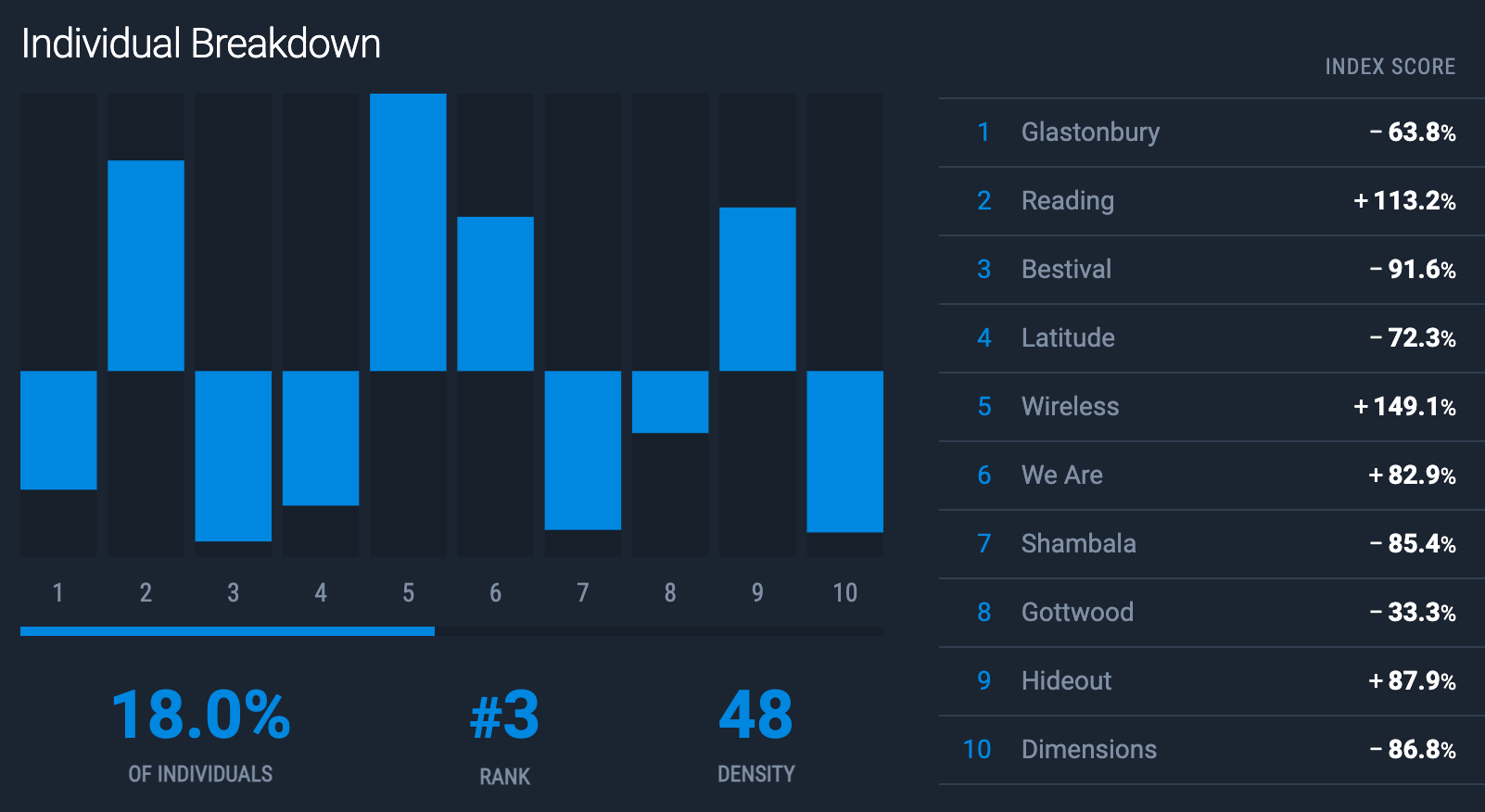
This group is largely centred around influential figures in the Gen Z demographic - some of the highest levels of engagement lie with reality TV stars such as Joey Essex, Charlotte Crosby, and Lucy Watson. Music is also a unifying force, with Stormzy; Tyler, the Creator; and The Weeknd showing this group’s emphasis on the here and now of popular culture. Wireless Festival - hosting the likes of Travis Scott, Playboi Carti, and Lil Uzi Vert this summer - massively over-indexes with this community. A contemporary, urban music festival in the heart of London seems a fitting home for our Gen Z Pop Culture fans.
Sustainability:
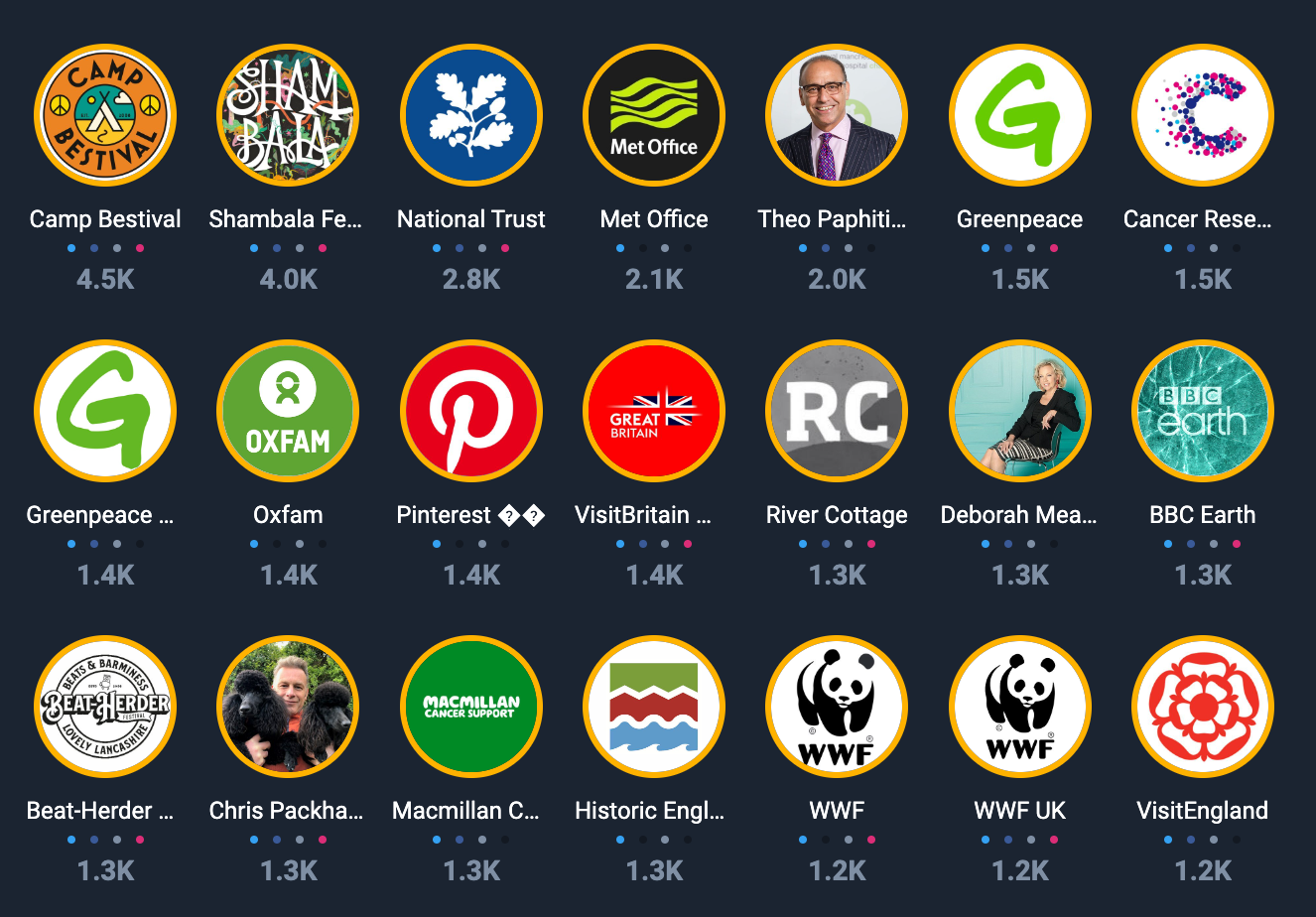
Another key audience in the study coalesced around the themes of sustainability and sustainable event planning. This combination of interests points towards professionals in the festival space and individuals committed to the longevity of festival culture. We see environmental charities such as Greenpeace, WWF, and Environment Agency among the top influencers alongside festivals that are actively and publicly reducing their environmental impact. Bestival, Shambala, and Latitude are the three festivals that indexed most highly with this audience segment, all of which have strong sustainability initiatives and messaging in place.
Rock & Pop Music:
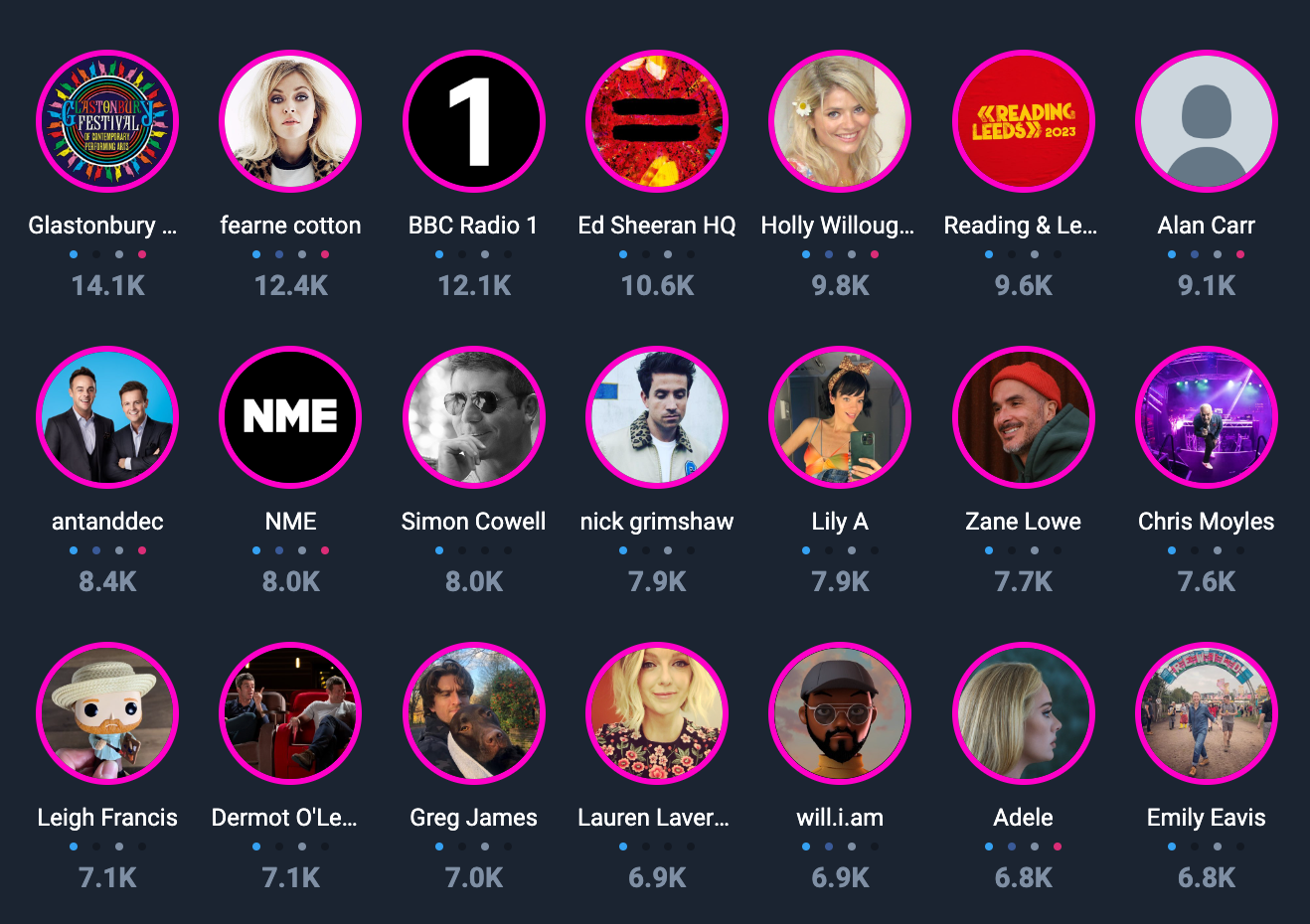
This group has a strong affinity for Rock & Pop as genres. On the whole, this audience skews towards the millennial age group with key influencers reminiscent of chart music from 10-20 years ago. That’s not to say these names don’t hold considerable relevance in the context of the UK music landscape; this cohort represents an important market segment for festivals, driving a significant portion of ticket sales and engagement. In this community, we see Glastonbury, Reading, and Bestival as the frontrunners.
Party People:
Here we have a group at the intersection of rap and electronic music. They engage with the most current sounds, favouring innovative artists whose music reflects the current cultural climate. The group’s interest in hip-hop spans trap, drill, and emerging subgenres; their interest in electronic music references techno, house, and drum and bass. Top festivals include Dimensions, Gottwood, and We Are in this community.
Creatives:
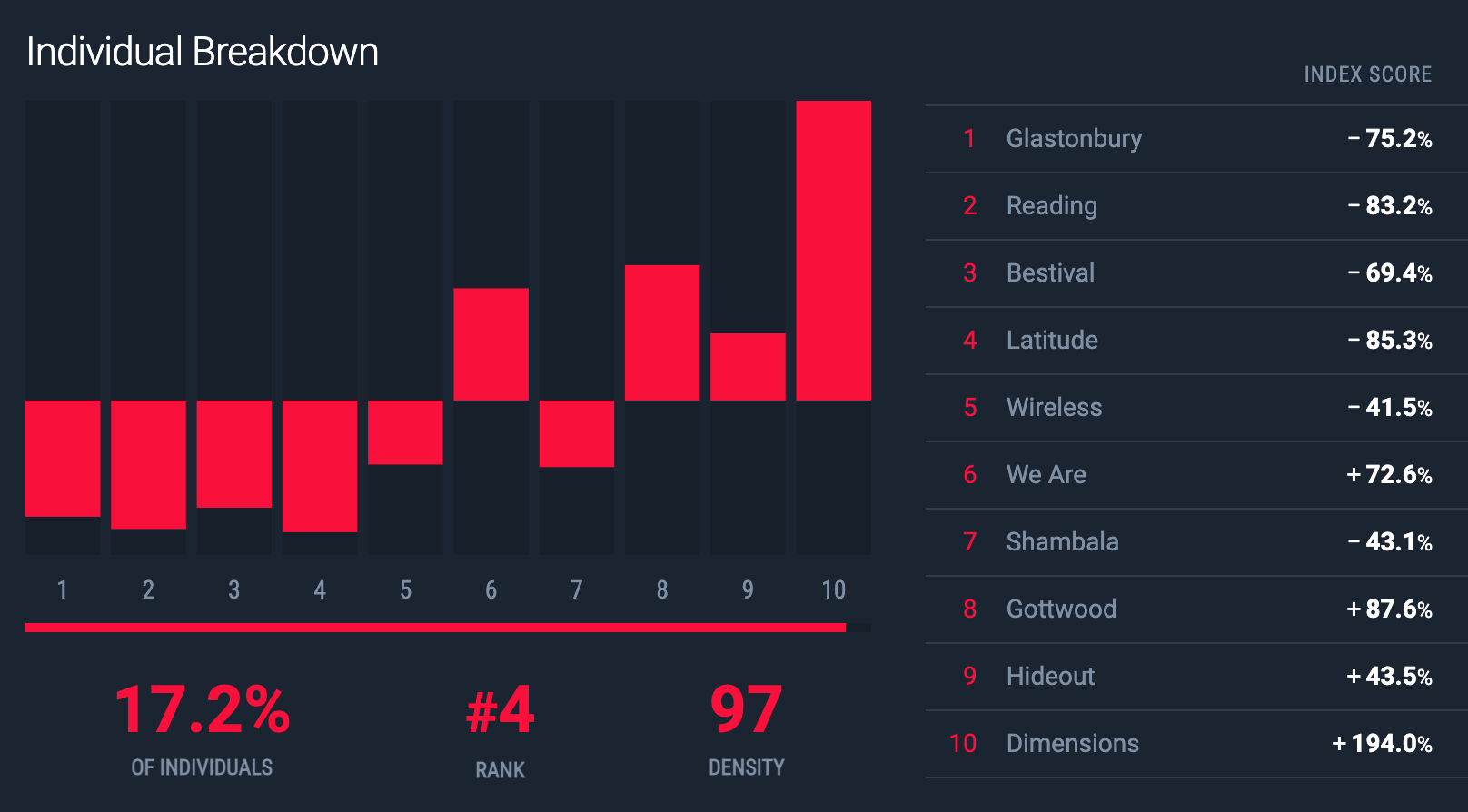
Festivals are inherently creative events, so it’s no great surprise we find a large community of creatives as regular attendees. These individuals are contemporary artists, musicians, and thespians who value the expressive freedom associated with festival culture. The dramatic arts provide a focal point for the group, engaging with popular theatres, art centres, and performance-focussed publications. The strongest name for this group is Latitude Festival, well-known for its diverse performance culture, with comedy, poetry, and live acting celebrated alongside the music.
To conclude: the festival landscape has a place for just about everyone, but our frontrunner audiences of Gen Z Pop Culture and Sustainability perhaps give us some idea of where we’re heading. Sustainability is a theme we see rapidly gaining traction across all of our studies - the vast majority of Gen Z, in particular, prefer to buy from sustainable brands, with a recent study finding they are willing to spend 10% more on sustainable products (firstinsight.com). Comprising nearly a third of the world’s total population, catering to sustainability-minded, younger audiences is a hugely valuable opportunity.
To find out more about our offerings and how we can help you meet your current and future audiences, book a demo here, or drop us a line at [email protected].