

Tom Holland sits at the centre of two of this summer’s biggest films.
But look beneath the surface and the audiences around The Odyssey and Spider-Man: Brand New Day reveal very different motivations, interests and opportunities for marketers.
For entertainment marketers, knowing that an audience likes film, cinema or Marvel is only the starting point.
The more valuable question is: what is actually driving their interest?
Using Fifty’s audience intelligence, we analysed the audiences around Tom Holland, The Odyssey and Spider-Man: Brand New Day and uncovered a series of distinct communities within them.
And the differences are significant.
The same star. Very different audience signals.
Tom Holland’s own audience over-indexes among Celebrity Culture Buffs, Trend-Led Gen Zers and the Saturday Night TV Crowd.
These are more mainstream culture and entertainment audiences. Their affinity is disproportionately towards the star himself, suggesting that casting, celebrity and cultural relevance can be powerful ways into these groups.
The Odyssey looks very different.
Its strongest over-indexing tribes include IMAX Purists, Millennial Cinephiles and Cinema Tastemakers: audiences whose interests are more deeply rooted in cinema, filmmaking, art and the experience of the format itself.
Then there is Spider-Man: Brand New Day, where Comic Book Gamers and the Saturday Night TV Crowd emerge strongly, bringing together an established fandom audience with a much broader mainstream entertainment group.
Those differences give marketers much more to work with than a broad definition of a film or entertainment audience.
Granularity creates better creative opportunities
Understanding these communities also changes the messages available to a campaign.
A Cinema Tastemaker interested in The Odyssey may respond to a very different proposition from a casual entertainment audience attracted to the scale of the next major release.
Likewise, a Comic Book Gamer’s relationship with Spider-Man is different from that of the Saturday Night TV Crowd.
The objective is not simply to create ever-smaller audience segments.
It is to identify meaningful differences in motivation and behaviour that can influence the campaign.
That could mean putting greater emphasis on talent and cultural relevance for one audience, the craft and spectacle of cinema for another, or the scale and excitement of a major entertainment moment for another.
Turning the insight into media
This is where granular audience intelligence becomes particularly powerful.
Because Fifty Tribes are built to be actionable, marketers can move directly from understanding these communities to exploring how best to engage them.
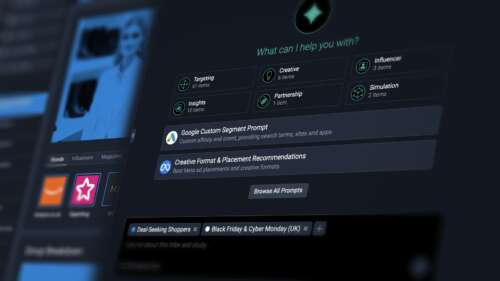
In Helena’s example, Fifty AudienceAI takes the Saturday Night TV Crowd and explores how a campaign for Spider-Man: Brand New Day could drive ticket sales.
It identifies a potential communication strategy, creative and content directions, activation tactics and a channel hierarchy, including the different roles broadcast television and streaming platforms might play.
So audience intelligence becomes an input across the campaign:
Audience → motivation → message → creative → channel → targeting.
Rather than selecting a broad, off-the-shelf segment and relying on the media platform to determine who within it matters, the marketer starts with a much richer understanding of the people they actually want to reach.
The real opportunity
The interesting finding here isn’t simply that The Odyssey and Spider-Man have different audiences.
It is just how much variation exists within and between those audiences, even when the films share the same leading actor.
That granularity gives marketers more ways to build relevance.
Star power can provide one route in. Fandom another. Cinema craft another. Mainstream entertainment another.
The opportunity is to understand which of those levers matters to which audience, then reflect that intelligence throughout the media strategy.
The Bottom Line
Broad audience categories can tell you roughly who might be interested. Granular audience intelligence can tell you why they care and give you something meaningful to do with that knowledge across creative, messaging, media and targeting.
Watch the full video above.
We’d love to know how we might be able to support you; please book a demo or reach out to us at [email protected].